
Harding County Bench Warrants Explained
New Mexico's own paperwork uses two labels for the same idea: "Failure to Appear in Court Warrant" and "bench warrant." Both grow out of a case that already exists. A docket entry alone does not mean a brand-new criminal charge was filed. The Tenth District's official forms show the family clearly. There is the 9-212 District Bench Warrant, the 9-212C Bench Warrant for Magistrate/Municipal Court, and the 9-211 Affidavit for Bench Warrant. Harding County posts no public sheriff's list of these warrants. When a case is public, Case Lookup can show it. Even then, only the issuing court can tell you what the bench warrant entry means today.
Why the Harding County Bench Warrant Form Matters
The AOC FTA SOP spells out what a judge fills in on one of these forms: the warrant type, the failure-to-appear condition, any bond or release terms, the extradition condition, a signature, routing, and the eventual disposition. Knowing that vocabulary makes a clerk conversation far easier. Just remember the public forms page is an index, not a database of completed warrants. A Harding County search result may show one docket event while the internal record holds many more fields. Ask the clerk to confirm the case number, the court, current status, hearing date, any bond or condition, and the official next step.
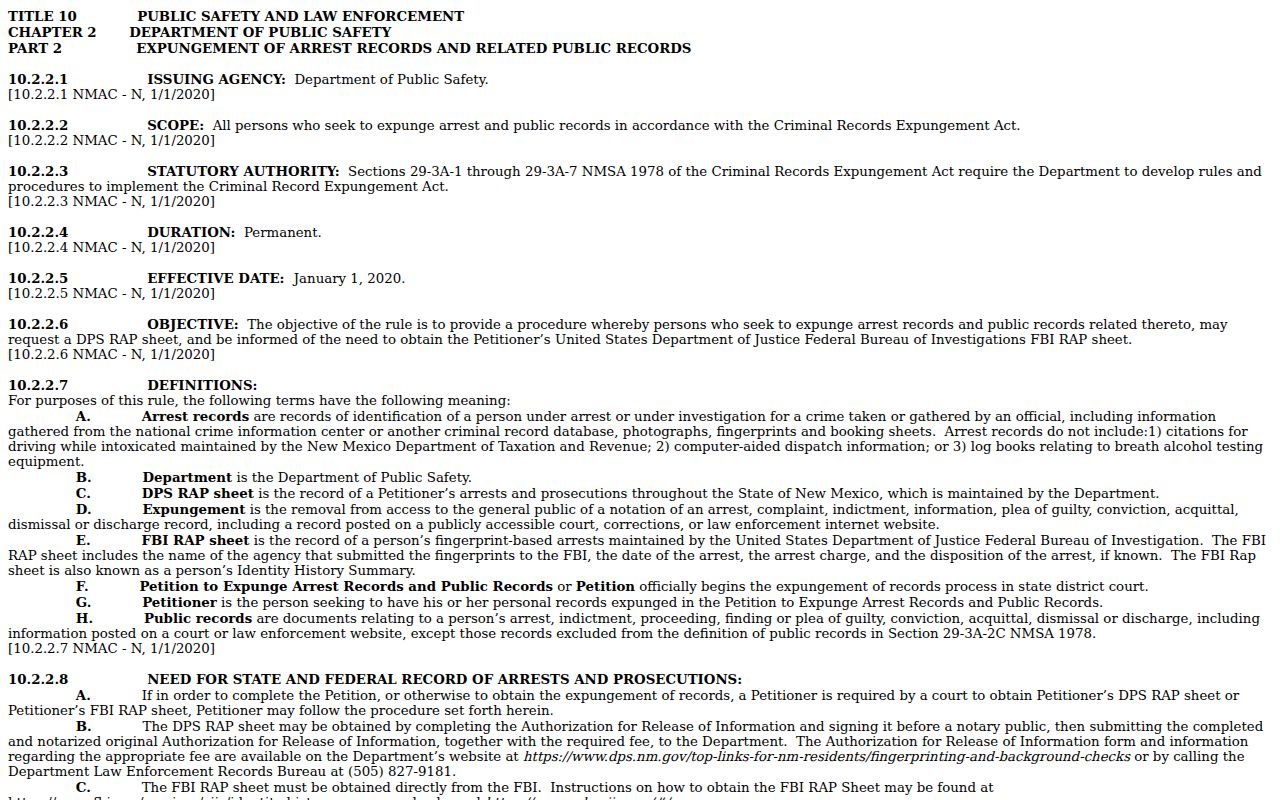
The New Mexico arrest-record definitions set the terms Harding County offices work from. For a live status, call the issuing court itself.
How a Harding County Bench Warrant Is Issued
It starts small. Someone misses a required appearance or breaks another court condition. The court then builds the FTA paperwork, picks conditions and any bond or extradition range, gets the judge's signature, and routes the warrant into law-enforcement systems. Harding County's public pages show none of these entries, so the court is the only place to check.
- Read the notice and identify the court, date, and case number.
- Search Case Lookup if the case is public and indexed.
- Call the issuing clerk and ask whether a current FTA or bench entry exists.
- Ask whether the court directs an appearance, counsel, bond, surrender, or another step.
- Contact the Sheriff or dispatch only for instructions the court leaves to law enforcement.
District and Magistrate Harding County Bench Warrants
Two courts, two towns, two phone numbers. Harding County District Court in Mosquero sits at Fourth and Pine Street, 575-673-2252. Harding County Magistrate Court in Roy sits at 355 Chicosa Street, 575-485-2549. Traffic and misdemeanor matters usually belong to Magistrate Court; district criminal matters go to District Court. The exact case paperwork controls, so ask before assuming. The County Clerk at 35 Pine Street keeps county records but is not a court warrant desk. The Sheriff, also at 35 Pine Street, can route law-enforcement questions, though only the court issues and disposes of a bench warrant. Keep those addresses straight when you call or plan a records request.
Harding County Bench Warrant Versus Arrest Warrant
The two warrant types start in different places. An arrest warrant usually grows from an alleged offense and an authorized filing. A bench or FTA warrant grows from a case that already exists plus a missed appearance or broken condition. Either one can land a person in custody. The forms, the court questions, and the paper trail differ, and the Tenth District's 9-209 and 9-210 categories help separate an arrest-warrant request and a Warrant for Arrest from the bench forms. Don't ask the sheriff why a judge issued a Harding County bench warrant; that answer lives with the issuing court. Ask the sheriff or dispatch only which operational channel applies once the court has named the case. Harding County readers who sort this out early save themselves a wrong call.
Harding County Bench Warrant Status Terms
Skip the guessing from a short docket line. Use the AOC's exact status terms instead. "Served" covers an arrest or a voluntary turn-in. "Canceled" means withdrawal for some reason other than error, service, or surrender, while "Surrender" is court action that removes the warrant. "Issued in Error" flags a mistake, and "Returned Unserved" does not necessarily cancel it. A Harding County clerk can apply the right term to your case.
- FTA Warrant Issued
- The signed failure-to-appear process has been created and routed.
- Served
- The person was arrested or booked, including a voluntary turn-in under the SOP.
- Surrender
- The person addressed the issue through the court and the record was disposed accordingly.
- Returned Unserved
- Law enforcement returned the process for an identifier, bond, jurisdiction, or similar problem.
Payment Is Not Harding County Bench-Warrant Resolution
New Mexico's public-access notice is blunt: electronic payment resolves financial obligations only. A payment screen can show money due yet leave an FTA warrant, a required appearance, or a release condition untouched. Before sending anything, confirm the court, the case, the obligation, and the payment route. Then ask the Harding County court what record confirms the warrant's separate disposition.
Local gap: Harding’s official sources do not establish a bond window, accepted payment instrument, walk-in surrender process, jail address, or same-day recall practice.
Safe Surrender Is Not a Harding County Bench-Warrant Program
New Mexico Courts ran a Safe Surrender event on November 14-15, 2025, at Quay County District Court in Tucumcari. That event is useful context. It shows how a court-managed program can carry special eligibility rules. It does not guarantee every Harding County warrant qualified, or that anything similar runs now. Any current event must be checked by host court, date, order, and jurisdiction. Never travel on an unofficial roundup post. Ask the issuing court whether a future event covers the case, and keep any order, cancellation, or new hearing confirmation from Harding County or wherever the event is held.
Which Harding County Court Issued the Bench Warrant
Call the clerk next. Give the name exactly as it appears on the court paper, plus the case number and the court. Then ask pointed questions. Does the file show a Failure to Appear in Court Warrant or a bench entry right now? What status term did the Harding County court record? Ask about any new hearing date too, and what official action the court directs next. You can also ask which custodian handles a records request, and whether an AOC payment covers only a financial obligation. When you call, keep the details private. Do not publish the case number, birth date, address, or court paper anywhere. A relative in Harding County may make the call with the person's permission, but the call should still go through an official channel, and a public summary is never a substitute for legal advice from a lawyer.
Public Access to Harding County Bench-Warrant Records
New Mexico IPRA opens a request route for disclosable records, with exceptions. A bench record held by the court goes through the judicial custodian or the New Mexico Courts IPRA portal. For a county-held record, use the County Clerk's written request route instead. Name the specific court, case, date range, warrant type, and issuance or disposition field you want, plus your preferred format. Sealed, juvenile, confidential, and law-enforcement-sensitive material may not be released.
Remember: A no-result Case Lookup screen, a payment receipt, or a returned paper is not by itself proof that every court condition has ended. Confirm with the issuing court.